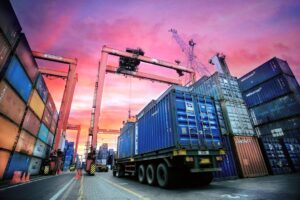




- Beijing has significantly expanded its strategic commodity stockpiles in recent years, though the exact scale of reserves remains opaque to outside analysts.
- Escalating conflict involving Iran is now stress-testing China’s inventory buffers across oil, metals, and other critical raw materials.
- The lack of transparency around China’s stockpile depth is itself a market risk factor, creating uncertainty for global commodity pricing.
A Stockpiling Strategy Built for Exactly This Moment
For years, Beijing has been quietly building up strategic reserves across a wide range of commodities — crude oil, copper, rare earths, and agricultural inputs among them. The rationale was straightforward: reduce China’s vulnerability to supply disruptions, sanctions pressure, or geopolitical shocks that could throttle the inputs its economy depends on. What wasn’t fully anticipated was how quickly that strategy would face a live test of this magnitude.
The escalation of conflict involving Iran — a significant oil exporter and a node in several critical supply corridors — is now placing Beijing’s reserve calculations under real-world pressure. Whether those stockpiles are deep enough to absorb a prolonged disruption is a question Chinese officials have carefully avoided answering in public.
Oil Exposure and the Strait of Hormuz Factor
China is the world’s largest crude oil importer, and a meaningful portion of that supply transits the Strait of Hormuz — one of the most geopolitically sensitive chokepoints on the planet. Any sustained disruption to flows through the region would test Beijing’s strategic petroleum reserves (SPR) in ways that go beyond routine demand management. Analysts have estimated China’s SPR capacity at somewhere between 80 and 100 days of import cover, but verified, up-to-date figures simply don’t exist in the public domain.
“Beijing has driven a major increase in strategic commodity inventories — but their scale remains unclear.”
Opacity as Both Shield and Liability
China’s deliberate ambiguity around its stockpile levels serves a strategic purpose: it makes adversaries uncertain about how long Beijing can sustain operations without external supply. But that same opacity creates a significant market pricing problem. When commodity traders cannot model China’s buffer capacity with confidence, they tend to price in worst-case scenarios faster, amplifying volatility during geopolitical flare-ups.
Implications for Global Commodity Markets
For investors exposed to energy, base metals, or agricultural commodities, the current environment demands closer attention to China’s import data as a proxy signal. A sudden surge in Chinese spot purchases — particularly of crude or copper — would suggest reserve drawdowns are occurring and that Beijing is moving to replenish. That kind of buying activity could provide significant upside support to commodity prices even as broader risk sentiment softens.

The Iran conflict is functioning as an unplanned audit of Xi’s commodity resilience doctrine — and the results are unreadable precisely because Beijing designed them that way. For commodity-linked token projects and energy-backed digital asset platforms operating in the MENA and Asia corridors, this opacity is a direct pricing risk: any confirmed Chinese reserve drawdown could trigger sharp spot market moves with little warning. Investors should treat China’s monthly crude import figures over the next 60 days as one of the most important leading indicators in the market right now.